


Minority and Society: “Gypsies” in Norway and Germany
A comparative analysis of past, present and future
Andreas Balsliemke · Term paper, 1997 · AI-generated English translation
This English translation was generated using AI (ChatGPT) from the original Norwegian paper. Andreas Balsliemke wrote the paper in Norwegian in 1997; the Norwegian version is the original. Statements and time references reflect the historical position in 1997 and have not been updated. Historical terms now considered discriminatory, and quoted prejudices, form part of the text under discussion. The original version is authoritative for the wording.
Editorial addition (2026): These images and captions were added later and are not part of the original study text. Full image records appear beside each image and at the end of this page.
Introduction
“Dreifach haben sie mir gezeigt, wenn uns das Leben umnachtet, wie man’s verraucht, verschläft und vergeigt, wie man es dreimal verachtet” – three ways of responding to the darkness of life, by smoking, sleeping or fiddling it away – is a passage in the German folk song “Drei Zigeuner fand ich einmal”, written down by N. Lenau in 1838. The melody was composed by Th. Meyer-Steineg in 1911. Despite this disparaging verse, the entire song conveys a certain envy of the free life led by “Gypsies”: “Nach den Zigeunern lange noch schau’n, muß ich im Weiterfahren …” – the speaker continues to look back at them as he travels on – begins the song’s final verse.1
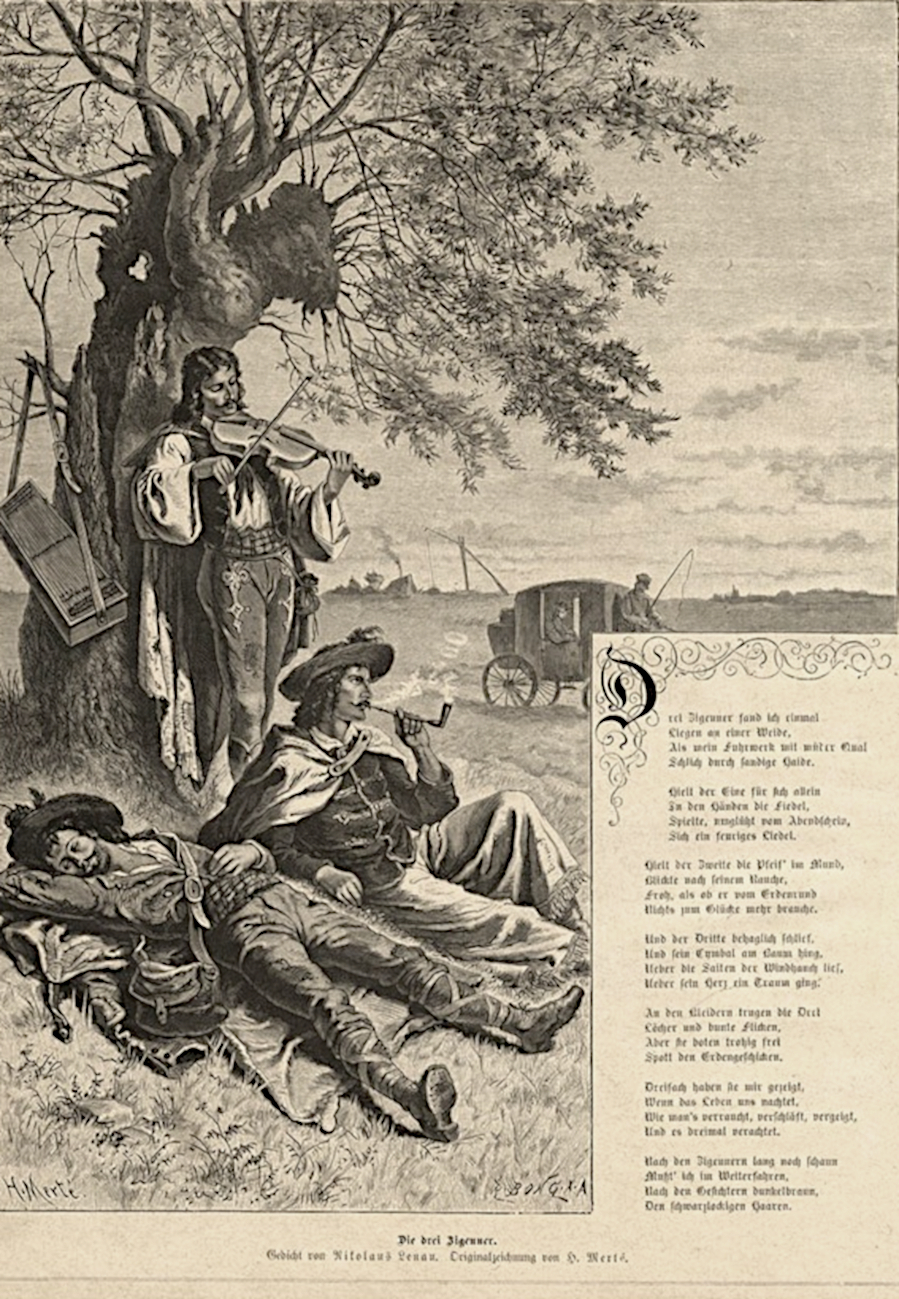

The same feeling of envy arises when listening to a song that, as far as I know, Reinhard Mey wrote in 1972: “Musikanten sind in der Stadt” is not directly about “Gypsies”, but about singers. Yet, considering the usual prejudices against “Gypsies”, it is easy to imagine that the song might have been about this ethnic group before Mey replaced “Zigeuner” with “Musikanten”. The song illustrates something my father and other older people also told me: settled people generally felt a profound distrust of travelling people. They believed that Travellers stole anything they could get their hands on, were dishonest and avoided work. At the same time, however, they exerted a strong fascination, not least because they could travel whenever and wherever they wished.
The word “Zigeuner” had and still has a very negative ring, and not least for this reason was associated with the expression “ziehende Gauner”, meaning travelling crooks. Ethnologists nevertheless agree that it derives from the Greek expression “athinganoi”, referring to the descendants of the Gnostic Simon Magus and their rules of ritual purity. The word occurs in many European languages: “adsingani” in Latin, “cigan” in Bulgarian, “tigan” in Romanian, “cigan” in Polish, “cygan” in Russian, “tschingiane” in Turkish, “gypsies” in English, “Zigeuner” in German and “sigøynere” in Norwegian, among others.2 If one considers only its historical roots, the term would therefore not be negative, but would instead describe an important feature of the religious culture – its purity rules – of a large part of the people with whom this paper is concerned: the Roma. “Roma”, singular “Rom”, is a designation from Romani, the language of Europe’s “Gypsies”, and encompasses all the groups belonging to this people. The word has entered discussions about political correctness in recent years and does not yet have quite the same negative connotations as “Gypsies”.
In this paper I shall describe some important features of this people’s history and present situation. I shall examine the problematic relationship that the settled majority has always had with this often travelling minority, which is therefore now commonly referred to in Norway by the politically correct expression “de reisende”, the Travellers.3 While my seminar presentation dealt only with the disastrous development of relations between Norway’s dominant majority and the group usually called “Fants”, I realised that I knew more about Travellers in Norway than about the Sinti, the German branch of the Roma. I have now also read about the latter, so it should be possible to describe both.
The origins of Roma in Norway and Germany
Both Norway and Germany had in the past, and still have today, population groups related to other European Roma. In Norway they were called “fant” in the south, “splint” in the west and “tater” in the east and in Trøndelag. Officially they were usually designated “omstreifere”, or wanderers. They called themselves “reisende” or “vandriar”.4 The latter is probably more of a Swedish expression. In Germany the group was called “Zigeuner”, while its members called themselves Sinti.
A frequent, and perhaps somewhat tendentious, question is where and when this travelling people originated. The answers have been as varied as the periods in which the question was asked. Although there is still no definite answer, the explanations can be seen to rest on two different assumptions: sometimes the group’s existence has been explained in racial or ethnic terms; at other times a social perspective has shaped the explanation.
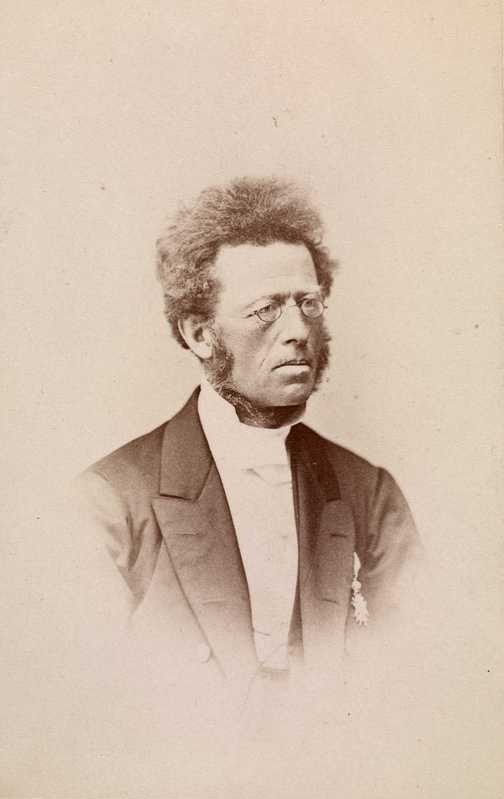

Eilert Sundt, sometimes regarded as Norway’s first sociologist, published a book in 1850 about “Fante- eller landstrygerfolket i Norge”. He studied not only the Travellers’ origins but also their way of life. Sundt believed that Norwegian Travellers descended from “great” and “small” wanderers. In his view, the former were “Gypsies” from southern Europe and Asia, while the latter came from Germany and other northern European countries. Later research showed that Sundt was broadly on the right track. Although it has not yet been possible to establish exactly where and when the group began its migration or what route it followed, linguistic research is considered to have established that the first Roma came from northwestern India.5 It is also certain that Travellers have always mixed with settled populations in the countries through which they passed. This probably also explains why Travellers in Norway are only distantly related to southern European Roma and are likely to descend largely from northern Europeans, particularly Scandinavians. The relationship between German Sinti and, for example, Roma in Romania is considerably closer.6
If, by contrast, the group is considered a social phenomenon, there is broad agreement that Travellers also descend from people who were excluded from a local community for one reason or another and consequently joined a nomadic group. Throughout history many people lost their farms through disasters or wars. The Thirty Years’ War, which made many people homeless, is often mentioned, but one could also go back to the thirteenth-century Crusades or the expansion of the Ottoman Empire, particularly in the fourteenth century. Together with the original Roma group, these people were joined by others who earned their living through work not regarded as honourable: knackers, horse castrators, chimney sweeps and others. These activities were absolutely necessary but nevertheless carried no status in the local community.
The best approach is probably one that takes both social and ethnic factors into account. The language of Norwegian Travellers, and of course of German Travellers too, shows a close relationship to that of southern European Roma, which in turn can be traced back to Indian languages. Genealogical studies, on the other hand, indicate that the group in Norway descends more from northern Europeans. I therefore consider it quite likely that refugees from India and other southern European countries mixed with northern Europeans who joined the travelling group for various reasons. The farther north one goes, the stronger the northern European genealogical contribution becomes. This seems to me a fairly plausible explanation.
Some aspects of the culture of Norwegian and German Travellers
Approximately eight million Roma currently live in Europe, distributed unevenly among the countries. Most live in Romania, with two million, Bulgaria, with 0.8 million, and Hungary, with 0.6 million. Germany has about a hundred thousand Sinti and Roma, whereas Norway has only about a thousand. Exact figures do not exist, however, because it is difficult to determine who belongs to the group. Apart from the travelling part of the population, closely related to southern European Roma and usually the only people associated with the term “Gypsies”, many are settled, descend more from northern Europeans, or combine both backgrounds. Norway is not the only country with “small wanderers” who have few ancestors from India: this also applies to the Yenish in Germany, the “tinkers” in England and particularly Ireland, and the “Voyageurs” in France. It is therefore incorrect for Dagbladet, where I found an article on this subject in a Saturday edition in June 1997,7 to give the number of “Gypsies” in Norway as 345 and equate this with the number of Travellers who receive or have received social assistance.8
It is difficult to speak about Roma culture in general because there are substantial differences between countries, groups and families, and between travelling and settled people. It is therefore possible to describe only some general cultural features before focusing particularly on Sinti in Germany and Travellers in Scandinavia. According to Katrin Reemtsma, general cultural elements distinguishing Roma from the majority population, and sometimes from each other, include:
- a) the need to distinguish themselves from the majority;
- b) a language that may be strongly dialectal but derives from Romani;
- c) a social structure centred on family and kinship;
- d) forms of political and social self-government, often, but not always, with a monarchical structure;
- e) a system of social control based on ritual purity and impurity;
- f) an occupational structure that places great importance on independence;
- g) their own understanding of history as a travelling or settled group;
- h) a religious culture combining a Catholic, Protestant or Muslim foundation with older religious elements of Roma culture;
- i) children’s socialisation, closely linked to the adult world;
- j) the distinction between men and women;
- k) the importance of marriage.9
German Sinti are closely related to Sinti in northern Italy, the Netherlands and Belgium, and to the Manush in Alsace. Like all Roma groups they distinguish themselves strongly from other groups and from the majority population. At the same time, the differences are less visible than most people imagine. The vast majority of Sinti, for example, are settled. Many own farms; others work as actors, musicians or puppeteers but have permanent homes and travel, if at all, only in summer. Contrary to what the majority population believes, very few “Gypsies” are therefore not settled. The social structure of Sinti and Roma was destroyed more extensively in Germany during the Third Reich than in other countries. The strongly family- and kinship-oriented culture in particular did not survive the 1930s, or survived only partly. The popular myth is therefore no longer accurate in this respect either: if travelling people in Germany travel at all, they are seldom accompanied by a large extended family.
Most Sinti are Catholic; only some are Protestant or belong to other congregations. Their faith nevertheless includes non-Christian elements such as purity rites, ancestor worship and belief in the spirits of the dead. Although most are now settled, traditions preserve the sense of a travelling way of life, which remains very important to the people.
Apart from the “original” Roma population in Germany, usually belonging to the group that calls itself Sinti, there are two other Roma groups that arrived only in this century. One consists of some of the so-called guest workers recruited by the government in the 1950s, 1960s and 1970s. These Roma are mostly settled industrial workers who gradually brought their families to Germany and live here with varying degrees of integration into local society. The other consists of refugees from Yugoslavia, and to some extent from Romania and other eastern European countries. Their situation there became particularly difficult after the fall of communist regimes and the rise of nationalism. Some have received asylum in Germany, but most have not. Many have already had to return to their countries, where their circumstances were then even more difficult than before.
I have almost no reliable information about how Norwegian Travellers live today. Two months ago Dagbladet published an article entitled “Slakter sigøynersatsing”, stating that the authorities did not know “where the Norwegian Gypsies are”.10 I have little confidence in what the newspaper reported: if anyone in the past knew who was considered a “Gypsy” and what he or she was doing, it was the state, particularly the police. In Germany this has changed little, if at all.11 It has always been, and remains, common for those dealing on the state’s behalf with conflict between the majority population and Roma, and who ought to help this group, to hold more or less obvious prejudices. Karin Zetlitz, an adviser in Norway’s Ministry of Social Affairs, is one of many examples. According to Dagbladet she was “the state’s Gypsy consultant in the 1970s”12 and is therefore quoted uncritically as someone positively committed to the issue. Her incidental assertion that the group has “general negative characteristics”13 can be understood only if one knows that her own and the state’s intention was “to break with the Gypsies’ travelling and distinctive habits”.14 It thus becomes clear that, up to the present, the objective of Norwegian policy towards Roma has continued to be the destruction of what is distinctive about their culture.
That is why I chose to write a little about how Travellers lived in Norway in the past. This makes it possible to point not only to cultural differences from the majority but also to the positive importance of travelling people precisely because they moved around the country.
A particular feature of Norwegian Travellers, compared with their German counterparts, for example, was that many travelled by horse and wagon only in winter and exchanged these for a boat in spring. In summer many travelled in small sailing or fishing boats. This applied particularly to the “Fants” on the west coast. Not all were wealthy enough to travel in such a boat or by horse and wagon, however. Many had to manage with a simple boat, a donkey, a bicycle, or even on foot. One can imagine that this was not an easy way of life in Norway.
In earlier times Travellers often stayed overnight on farms, but also on small tenant holdings or in boarding houses. There they sold their products or did various kinds of work. Their hosts often provided food, although the reverse could happen if the host was poor. Not least because of prejudice, they were less welcome among wealthy farmers and more welcome among poor ones. Poor people were less likely to be prejudiced against the travelling group. If no place was available on a farm, or while travelling, people also slept outdoors or in tents, naturally only possible in summer. Occasionally several families joined together and founded a small settlement. Thus, in every century, part of the travelling population settled as farmers without being forced to do so by the state.
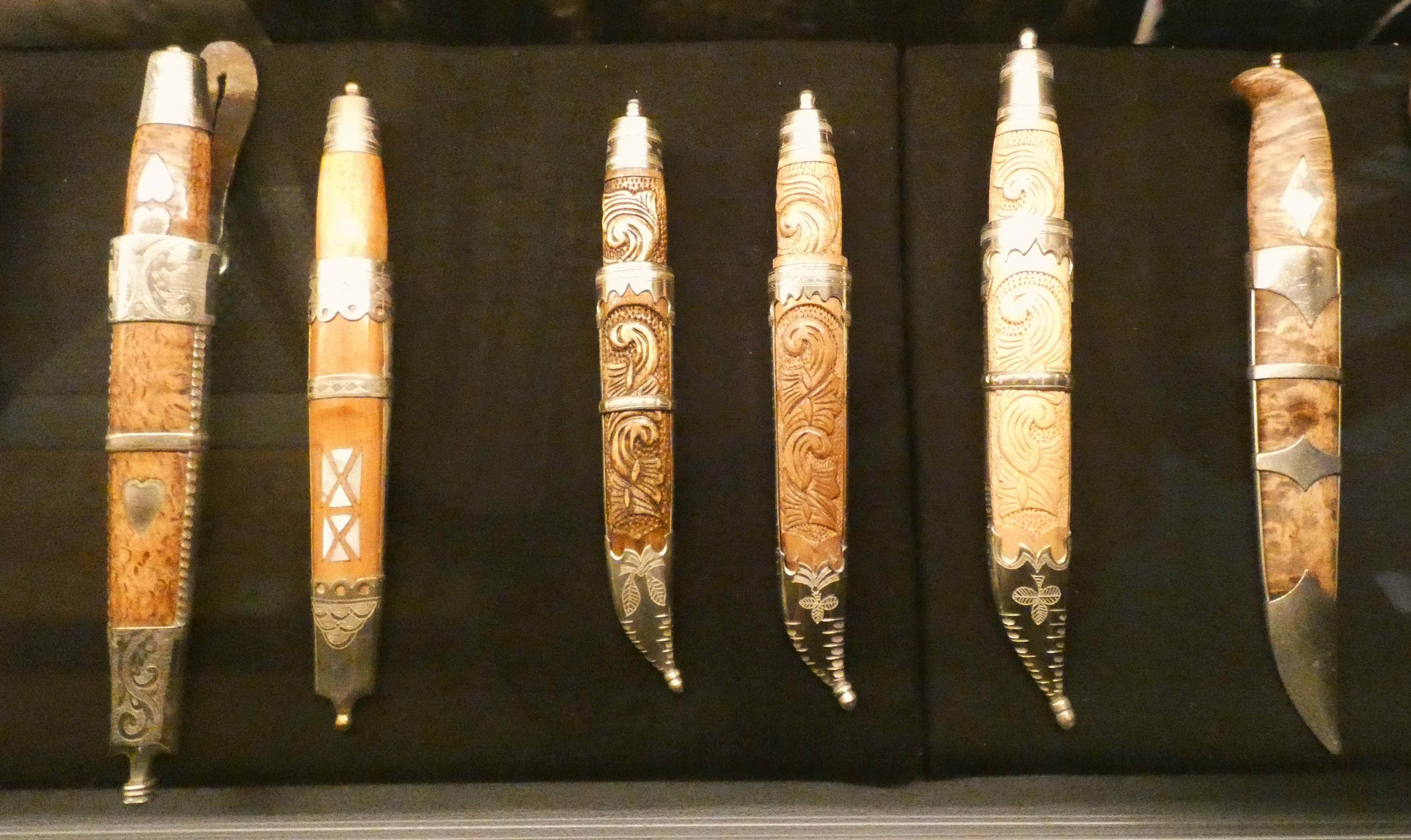

Travellers in Norway and elsewhere often had particular occupations that made movement from village to village possible or necessary. Men frequently practised a craft in one of the following areas:
- a) Horses: they acted as veterinarians, castrated horses – a dangerous job – worked as farriers or traded horses.
- b) Wood: they made chairs, worked as turners or practised similar trades.
- c) Bone and horn: they made combs, spoons, drinking horns and similar objects.
- d) Metal: they made buttons and belt buckles, worked as blacksmiths, bladesmiths or watchmakers, made decorative silver objects, or traded scrap metal and antiques.
- e) Land: they worked on farms or in forests.
Women also contributed to the household’s livelihood, often on an equal footing with men:
- a) Medicine: they worked as healers using herbs and powders, but also magic.
- b) Magic: they predicted the future by reading palms or coffee grounds. According to Ragnhild Schlüter this was not merely play-acting, but also required psychological knowledge.
- c) Crafts: they made household goods and textiles, crocheting, sewing and embroidering items for sale.
- d) Trade: they traded in almost everything imaginable.
Norwegian Travellers had their own language, closely connected with Asian languages and Romani, but also containing many words from Norwegian and other European languages. It also shares much with Rotwelsch, described here as the language of German Sinti. In addition they had a kind of sign language using twigs that allowed communication over a certain distance.
In a short term paper like this, only a few features of the culture of Norwegian and German Travellers, and of Roma in general, can be mentioned. Readers seeking more detail can consult Ragnhild Schlüter’s “De reisende” and Katrin Reemtsma’s “Roma und Sinti”. Reemtsma in particular appended a long bibliography, although she warns that almost all books about “Gypsies” so far have been written with an overall negative bias.
Very few researchers have so far investigated the positive developments arising from a section of the population travelling from place to place and thereby enabling, for example, a movement of technical innovations that would otherwise have been impossible. Because Travellers crossed the entire country and visited other countries, and because they very often practised a craft, they adopted new techniques as soon as these appeared and spread them throughout the country. Instead of examining what was positive about part of the population choosing not to settle, research and politics have almost exclusively focused throughout history on the negative features of a travelling life. This too helps explain why the objective has always been to eliminate Roma culture.
How Norwegian society treated Roma
As one might imagine, Norwegian Travellers were persecuted throughout almost their entire history.15 A national law as early as 1276 prohibited giving shelter to travelling people. From 1536 Travellers could be expelled from the country, and in 1589 it was even decreed that the leader of a travelling group, often calling himself a king, should be executed. A new law in 1604 provided for annual inquisitions, known as “Fante hunts”. Although these probably did not take place every year, but rather whenever some occasion for persecution arose, they continued until 1907.16
The Church also helped darken Travellers’ lives. As early as the fifteenth century bishops prohibited priests from helping travelling people in any way. They could not be baptised or confirmed, and consequently received no instruction in reading and writing. They could not marry, receive a final blessing or be buried in a churchyard.17
Because Travellers were often considered outlaws and belonged to no bailiwick or other governing jurisdiction, they could be imprisoned without legal proceedings or a verdict. Some municipalities employed so-called “ståtarkonger”, particularly when they wanted to avoid Travellers placing a burden on poor relief. These were village guards with considerable powers. They were supposed to prevent poor outsiders from entering municipal territory, and some went so far as simply to kill them. In the mid-eighteenth century houses of correction and forced-labour establishments were introduced. People labelled “work-shy” were arrested and could then be exploited as cheap labour. Christian instruction was provided at the same time so that Travellers could be confirmed. In this way travelling people could now also obtain identity papers.18
After Eilert Sundt published his book about the “Fants” in 1850, they were viewed as a social phenomenon to be combated. On the one hand the intention was to “rescue them back into society”;19 on the other, society was to be protected from the supposed danger of contamination associated with travelling people. Attempts were now made to settle adult Travellers and place their children in foster homes. The plan worked poorly. First, Travellers had a culture of their own, which was of course not recognised as a culture, and wanted to preserve it. Children therefore ran away to their parents, and settled Travellers began travelling again, abroad if necessary. Second, many municipalities did not want “Fants” settled on their territory and tried to get rid of them. Several even gave them money “in difficult economic times”20 so that they would leave.21
The so-called guardianship-council law, “Lov om behandling av forsømte børn”, of 1906 and the vagrancy law, “Lov om løsgjengeri, betleri og drukkenskab”, of 1910 accelerated action against Travellers around the turn of the century. It was now legally permissible, rather than merely a local practice, to arrest adult Travellers for forced labour. At the same time their children under sixteen were forcibly placed in unrelated families or children’s homes, where they too were often used as cheap labour. The intention was both to force travelling people to settle and to cut children off from their relatives, and thus from a culture that was thereby supposed to die out. Children were forbidden to receive visits from relatives, including their parents. Until 1970 almost all children of travelling people were forcibly adopted.22
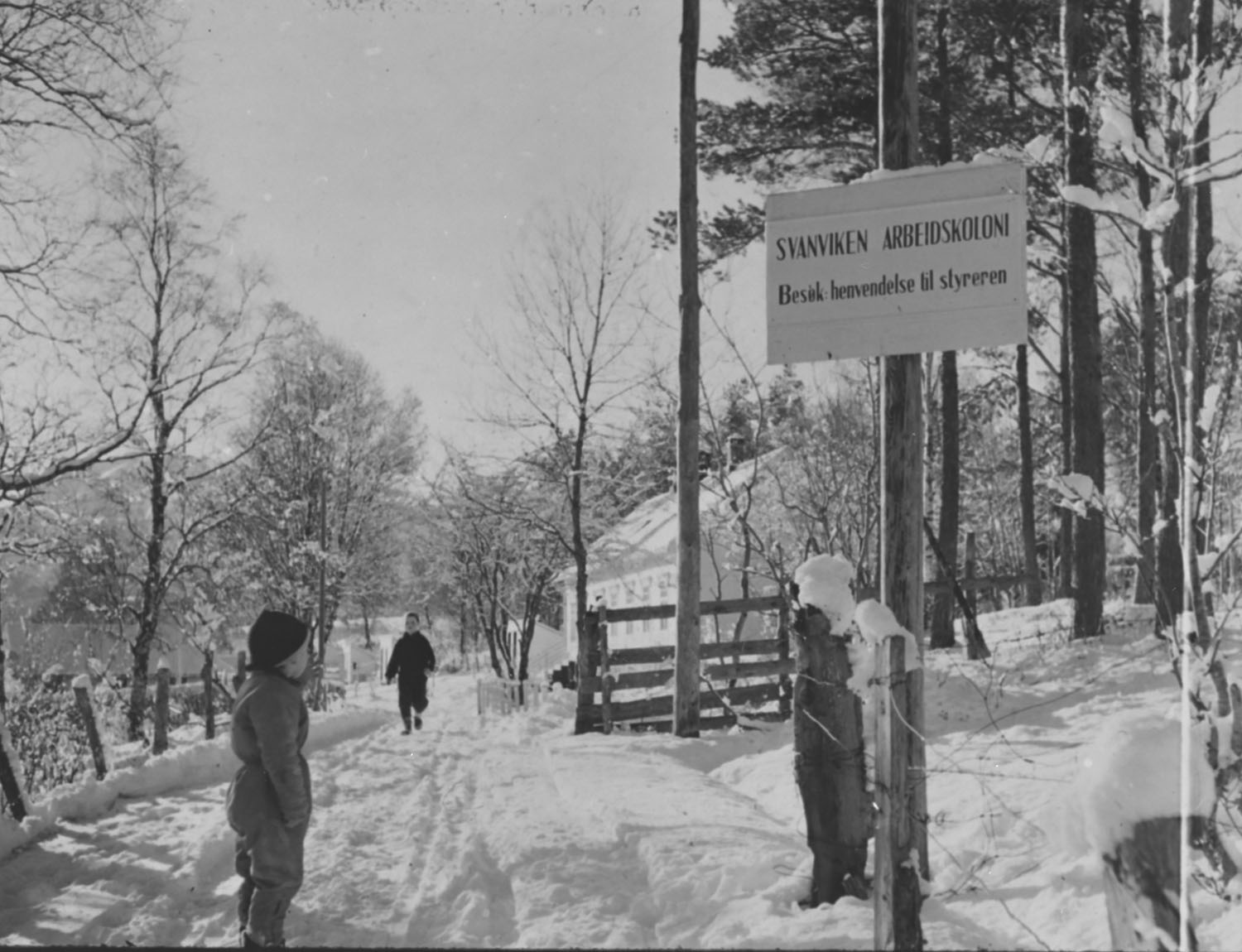

From 1908 “labour colonies” were established: a kind of large farm with around ten houses for travelling families, a school, kindergarten, shop and other facilities. Travellers were to become accustomed to discipline in working life. The arrangement was considered “voluntary”, but gradually became the only way a travelling family could keep its children. Travellers were closely monitored in the colonies. Romani, their language, was forbidden, as were conversations about their culture. Labour colonies encompassed most of the formerly travelling population, and some remained in operation until 1989. Only then was equality of treatment between Travellers and other citizens established in law.23
During the interwar years there was much discussion of national character and race. Scientists and the general population believed that races could have good or bad characteristics. Naturally the Norwegian people were thought to have very good characteristics, whereas others, such as Sami or “Fants”, were considered inferior. It was therefore regarded as important to control them so that they could not mix with people deemed superior. This was called eugenics or racial hygiene. Policy towards the travelling population was no longer shaped by the idea of rescuing this group back into established society. Instead, the aim was maximum control and separation; ideally, one would probably have liked to eradicate the “Fants”.24
From 1927 Norwegian Travellers were registered in central files. From 1934 individuals considered “inferior” could be forcibly sterilised. Travellers were placed in this category, as were, among others, homosexual and mentally ill people. To “prove” a person’s supposed inferiority, it was sufficient to point to criminality among relatives. Sterilisations continued from 1935 until the early 1950s. The number of people sterilised is not yet known. At the same time it became almost impossible for Travellers to obtain trading licences.25
The occupation did not greatly change Travellers’ situation. They continued to be exploited as cheap labour, particularly in military construction, and continued to be forcibly sterilised. The threat of deportation naturally added a psychological burden, but deportations were rare. Fortunately, neither Quisling’s government nor the German occupying authorities paid much attention to travelling people. Germany’s surrender therefore brought no great liberation for them either. Forced sterilisation continued until about 1950, forced adoption of their children until about 1970, and placement in labour colonies until these were closed in 1989. In addition, an animal-protection law introduced in 1951 prevented Travellers from keeping a horse to transport themselves or their goods: this was prohibited. The law was repealed in 1974, when hardly any Travellers remained in Norway.26
How German society treated Roma
The history was no better in Germany. One of the first written sources about “Gypsies” dates from 1424 and consists of a few sentences in a diary by Andreas Presbyter of Regensburg. He wrote: “Likewise, in these times a certain tribe of Cingari, commonly called Cigäwnär, travelled in our lands. […] These people […] skilfully appropriated […] the possessions of others through theft. […] It was said among the people […] that they were secretly scouts in the country.”27 The travelling people from the south made a strong, often negative impression on ordinary people – something that has not changed in six hundred years.
The main grounds for the native population’s distrust were accusations of theft, fortune-telling and espionage. Their dark skin was also considered disturbing. Today it is regarded as certain that Roma never acted as spies. Although no one could claim that there was no theft among Travellers, it is also fairly certain that they were very often suspected and punished for acts committed by settled people. It can also be argued that, even in the Middle Ages, people projected their fears onto strangers from the east. Travellers’ skin colour in particular may have reminded ordinary people of the plague, which had killed about half the population in the thirteenth century. In a situation where social structures were breaking down, the Church was beginning to divide and rulers were unable to halt the Ottoman invasion from the southeast, the strangers and their culture must have seemed particularly frightening. As mentioned, some Roma were probably themselves fleeing that Turkish invasion.28 Understanding why people feared and distrusted “Gypsies” may be useful, but it explains only part of the persecution Travellers endured for centuries.
A systematic “Gypsy policy” began at imperial diets towards the end of the fifteenth century. As in Norway, the Holy Roman Empire under Emperor Maximilian decided that “Gypsies” should be expelled, although until then they had often possessed safe-conduct granted by one authority or another. The attention devoted to them at imperial diets was disproportionate to their numbers: there were actually rather few travelling families at the time. Apart from ordinary people’s distrust, powerful interests were also disturbed by Travellers. Alongside princes seeking complete control over the inhabitants of their territories, the urban bourgeoisie in particular saw travelling people as competitors. They often traded, enabling peasants to avoid travelling into town to buy necessities. Naturally, the craft guilds in the towns disliked this.29
Between 1495 and 1800 various authorities issued about 150 edicts intended to remove “Gypsies” from German principalities. I shall quote a reform ordinance from Hesse in 1540: “Since We, as ruler of the land, have decreed that no Gypsies or foreign beggars shall be tolerated in any of our territories, Our towns shall be free, whenever Gypsies touch our borders, to attack, plunder and strike them down.”30 As in Norway, giving shelter to travelling people was prohibited under severe penalties. In Brandenburg a law of 1686 ordered Roma men to be imprisoned in fortresses, women to be branded and children to be “confiscated”.31 In 1725 King Friedrich Wilhelm I made it law in Prussia that all Sinti and Roma over eighteen could be hanged simply for belonging to the group. The objectives varied. Sometimes the intention was “merely” to settle Travellers, whose occupations required movement, and make them adapt to the dominant culture. Often, however, the explicit objective was their physical extermination. As in Norway, it must also be stressed that not all local administrations, and certainly not the whole settled population, enforced the laws. Many Roma therefore managed to save themselves and their families throughout this history of persecution.
Persecution continued much as before in the nineteenth century. Changes were mostly associated with external developments in government and technology. After the German Empire was founded, for example, the collection of information about wanderers throughout the empire began in 1899 in a central register accessible to all local police authorities. Such registers have existed continuously since 1899 and are now held by the Federal Criminal Police Office, although with different contents.32 As in the late Middle Ages, nineteenth- and twentieth-century laws allowed Travellers to be expelled if they lacked trading licences, which were of course difficult to obtain. Katrin Reemtsma cites the expulsion of the Staganos family in 1907, the year of Norway’s last Fante hunt. This example shows the ruthlessness of such expulsions. To cover the costs, particularly the journey itself but also administrative expenses, the family’s animals and wagon were sold, and its members were put on different trains bound for Turkey.33 They thereby lost almost everything they owned.
Around the turn of the century policy was again shaped by the aim of settling travelling people. Parliamentary debates produced various proposals for forcing “Gypsies” to give up travelling. Among them, Frank, a representative of the Centre Party, proposed expulsion “to one of our South Sea islands” as a possible punishment.34 Although the supposed “Gypsy plague”35 comprised only about 3,500 travelling Roma according to the central register – there were probably many more Roma, most of them settled – parliament resolved that the government should draft a ban on “Gypsies wandering around in bands”.36 The government did not do so.
In wartime, particularly during the 1870–71 war with France and the First World War, Sinti were again accused of espionage. It was also widely believed that they escaped military service using forged identity papers. In reality many Sinti answered their call-up, even though they might have been able to leave, and some were awarded medals. Naturally, this did not become widely known.37
From the Middle Ages until the 1920s, policy towards “Gypsies” aimed to eliminate their way of life, either by expelling them or by forcing them to settle. Often the state administration sought to settle Roma and assimilate them into the country’s normal way of life, whereas local administrations did not want Travellers settled on their own territory. Local policy therefore aimed to expel them.
This changed in the 1920s, when racial thinking, and perhaps a form of social Darwinism, entered local and national politics. People began to believe that almost everything defining a person was hereditary. If so, people rejected because of their origins, such as “Gypsies” and Jews, their sexual orientation, such as homosexuals, or mental illness could not be assimilated. On the contrary, this reasoning suggested a fear that there would be ever more supposedly “inferior” individuals if these people were able to reproduce.
Although there was absolutely no proof that mental illness, homosexuality, theft or, indeed, a travelling way of life were hereditary – in fact, even eugenicists gradually found much evidence that this was not, or only partly, the case38 – eugenic thinking brought a new direction in policy. The aim was no longer merely to eliminate Travellers’ way of life, but to eliminate the Travellers themselves. For the first time this policy affected not only Sinti and Roma who actually travelled, but also families that had long been settled. Elimination was to be achieved by sterilising those who, in the prevailing view, should not be allowed to have children. This applied not just to Germany and Norway but to a number of other countries. California first introduced a law allowing sterilisation in 1909. In Europe, Denmark followed in 1929 and Germany in 1933; Sweden, Norway, Estonia, Finland and Iceland introduced their laws between 1934 and 1936, often taking the severe German law as a model.39
As in Norway, where “Gypsies” were sterilised from 1935 into the 1950s, this treatment was therefore common in many, though by no means all, European countries. In Sweden sterilisations continued until 1975, affecting around 60,000 people, particularly women, only some of whom were certainly Roma. In Denmark sterilisations continued until 1967 and in Finland until 1970. Sterilisation remains legal in Austria and Switzerland, although I have no information about whether it is still carried out on Travellers; I think these laws now apply “only” to mentally ill people. In Germany about 400,000 people were sterilised between 1933 and 1945, including, in the words of the Race and Settlement Office of the Berlin SS, “Gypsies and people of mixed Gypsy descent, regardless of whether socially adapted or antisocial and criminal”.40 “Mixed Gypsy descent” was a eugenic category difficult to define. Nazi “experts” on eugenics and “Gypsy policy” agreed that the Nuremberg blood-protection laws applied to Jews did not go far enough for Roma. Even a person classified as “ZM-”, meaning “a person of mixed Gypsy descent with a predominantly German proportion of blood”, was counted as a “Gypsy”.41
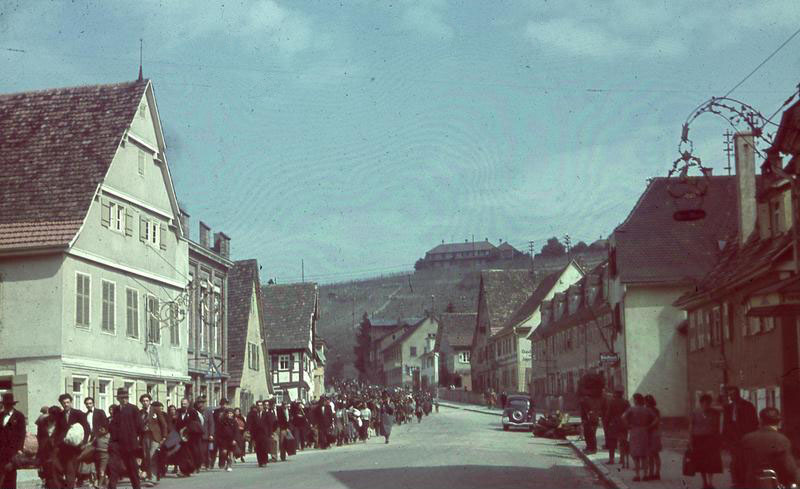

While persecution in Norway was somewhat less inhuman in the sense that the intention to eradicate the group was pursued by preventing reproduction, this was not the only method used in Germany. By 1939 almost all Roma in Germany, including those long settled, had been confined to “Gypsy camps” or ghettos. These were usually on town outskirts, often near sewage irrigation fields, rubbish dumps or cemeteries. People had to live in catastrophically degrading conditions, also incompatible with their religious ideas of purity. Worse followed. From 1939 Roma, particularly in Germany but also in Yugoslavia, divided between Germany and Italy, and in Romania, were deported to concentration camps, in Germany especially Auschwitz. There they were murdered. Thousands were starved, forced to work until they died of exhaustion, including for Siemens, Daimler-Benz, AEG, Messerschmitt, BMW and Volkswagen, abused in medical experiments, shot, gassed or exterminated in other inventive ways.42
After Hitler’s dictatorship ended, matters improved to some extent: Sinti in Germany were no longer killed or sterilised. Sterilisation was illegal until 1992; a new law now applies only in connection with certain mental illnesses. Illegal sterilisations also occurred before 1992, but as far as I know not among “Gypsies”.43 On the other hand, it took a long time for it to become generally known that “Gypsies”, as well as Jews, had been subjected to mass extermination. Many people still do not know this. Travellers were also not allowed to be mentioned on memorials, certainly not together with Jews.
Unlike Jews, Sinti and Roma also found it difficult to obtain compensation: they were regarded not as a persecuted people but as criminals, and criminals received no compensation. Courts often called experts who had themselves taken part in Nazi persecution and naturally did not admit it. A reasonably fair compensation law for Roma came only in 1981, and even that applied exclusively to those who had not yet submitted claims. After the war, German men and women with a dark past were often reappointed to the new administration. Joseph Eichberger, for example, responsible for deporting Sinti and Roma in the Reich Security Main Office, became head of the “Gypsy department” in Bavaria’s State Criminal Police Office after 1945. He was not the only example.
After the occupying powers abolished the old legislation in 1945, new regulations for “travelling people” were introduced in the 1950s. They were often harassing laws prohibiting travel in “hordes” and permitting special treatment. Their application to Sinti and Roma also rested on racist, or at least biologistic, thinking that persisted in police circles for many years after the war and partly to this day. Düsseldorf had a special commission for “thieving travelling people”.44 Its head, senior criminal investigator Hans Bodlée, wrote in 1962: “The group of persons available for observation consists of […] people of mixed Gypsy descent with parents of German blood, Jewish parents, and also combinations thereof, ultimately therefore a mixed people from three blood stocks, in whom – biologically conceivable – a concentration of negative hereditary material may be expected: deviousness, treachery, brutality, drunkenness, suicidal tendencies, etc.”45
Collective condemnation thus became normal again: all Roma were considered dishonest. The beginnings of political correctness in the 1980s did ensure that police documents renamed “travelling people” and “Gypsies” as the offender categories “HWAO”, frequently changing place of residence, and “TWE”, daytime residential burglary.46 Yet police continued using methods not normally applied to ordinary citizens. Even without a specific accusation, “entire operational units”47 might arrive at places where German Sinti and foreign Roma lived. It is also still perfectly common for police to take preventive fingerprints from Roma and Sinti children without any concrete suspicion against them. Treatment of “Gypsies” in Germany therefore remains preventive and repressive, wholly inconsistent with the Basic Law and the laws applying to other ordinary citizens.
In summary, after the war Sinti and Roma remained in the hands of their opponents in the police, academia and associations, and encountered the same collective condemnation they had faced throughout history. Only in the 1970s, when the old men who had often also been responsible for society’s campaign against travelling people under Hitler retired, did attitudes slowly begin to change, followed gradually by policy. The compensation law of 1981 may have been an early sign of this.
At the same time, despite substantial cultural and linguistic differences between families, these travelling, and now mostly settled, people managed to organise a Central Council. Although less influential than Jewish organisations, it has become one of Europe’s best-organised Roma associations. Statements by the Central Council of German Sinti and Roma can therefore now sometimes gain a hearing. Nevertheless, neither the central organisation, associations such as the Society for Threatened Peoples, nor parts of the parliamentary opposition have yet succeeded in securing explicit minority protection in Germany’s Basic Law. So far only the Danes in Schleswig-Holstein and the Sorbs in Brandenburg have received such legal protection.48
Relations between society and the Roma minority in Germany and Norway today
After the political changes of 1989, a renewed deterioration could be observed, particularly in Germany. Media coverage of Roma had, however, always been strongly negative. Studies from the 1980s showed that local newspaper reports about Roma concerned either crime, in 60 per cent of cases, or conflict, in 37 per cent. When an occasional article addressed something else, it either adopted the same perspective or presented Roma in reportage style as an unknown, uncivilised people from India, or as a collective with an entirely alien but uniform culture.49
Particularly during the asylum debate, the political discussion about the constitutional article guaranteeing asylum to everyone persecuted for political reasons, Roma became a renewed enemy image and were sometimes deliberately used as such. Although residents of the former GDR had no experience of actual travelling Roma, some reacted hysterically when Roma refugees from eastern European countries were to be taken to nearby asylum centres. The old collective negative image had not disappeared. Local initiatives were founded, sometimes led by the mayor, spreading fear of “Gypsies”, particularly on grounds of supposed theft. Refugees from Romania and Yugoslavia were compared to locusts. In the view of these citizens’ initiatives they could not be integrated and were therefore, sometimes unlike other refugees, greeted with remarks such as: “Here come the pigs. Go on, get the Kalashnikov.”50 Even politicians on the left, such as Green Party representative Daniel Cohn-Bendit, perpetuated the negative image of Roma and Sinti.51
Roma from Romania or even Yugoslavia were not regarded as legitimate asylum seekers, although scarcely any other people had been, and continued to be, discriminated against so extensively by both authorities and the population. Perhaps this went unnoticed because violating Roma human rights was, and remains, entirely commonplace in Germany too. Unlike antisemitism, which largely disappeared after 1945, racism against “Gypsies” did not.
I can judge the situation in Norway only from one article in Dagbladet from June 1997. Yet that article may already contain enough to show how little has changed.
One of those quoted is Lasse Johannessen, head of social services in Oslo municipality. For many years he was responsible for the programme for “Gypsies”, discontinued in 1990 after twenty years and expenditure of more than 600 million kroner on housing, education and employment. One might therefore expect him to have a positive attitude towards the issue. This is not the case. Indirectly, he describes his clients as stupid and work-shy – “he did not understand that he had to be there and run the shop”52 – with peculiar habits, such as purity observances. Instead of thanking the state for forcibly settling them in “fine homes”, they kept travelling away again. Karin Zetlitz, an adviser in the Ministry of Social Affairs, explains that the programme’s aim was to “break down the Gypsies’ travelling and distinctive habits”.53 Important elements of a people’s culture are thus described as “peculiar habits” that must be dismantled, by a representative of the Ministry of Social Affairs, quoted uncritically in a major national newspaper. She further explains that the programme was not discontinued because its objective was unjust, but because “general negative characteristics in the group were reinforced”.54 Her image of Roma therefore accords completely with the hostile image prevalent in many countries over many centuries.
The newspaper cites sixteen-year-old Nadjib Josef as a positive example. He chose to break with his family in order to complete compulsory schooling, as though travelling, often only in summer, and completing school were entirely incompatible. He is therefore described as “a successful result of the programme for Gypsies”.55 Incidentally, I find this a rather degrading way to describe a human being.
Historical summary
Finally, I shall attempt a brief, and necessarily simplified, classification of the historical development of relations between the majority population and Roma.
From the Middle Ages until the mid-nineteenth century, Roma were persecuted by both the state and the population. Nevertheless, there was no systematic approach to exterminating or expelling them. There were also certainly many people, both in the administration and among the population, who had nothing against them. On the contrary, many benefited from the travelling, trading group.
From the middle of the previous century, marked in Norway by Sundt’s book about the “Fants”, until about 1920, Travellers were seen as a social phenomenon to be systematically assimilated but also integrated into society. The intention was to “rescue” them from a way of life and culture considered inferior and undesirable, and to eliminate that way of life. Yet there was a certain contradiction between regional or national policies seeking to settle Travellers and local policies seeking to expel them.
From about 1920 – the first research institute for eugenics was founded in Sweden in 1922 – until at least 1970, there was a strong tendency to view Roma as a race to be eradicated for eugenic reasons. Not only their culture but the people themselves were deemed inferior and a danger to the settled population. They were no longer to be integrated into society but preferably to die out. Between 1933 and 1945 Germany pursued an active policy of murdering them; after 1945 policy again turned to assimilation, as it had before 1920. In most other countries, including Norway, policy developed less brutally. However, the intention to eliminate the group through sterilisation and forced adoption persisted longer.
Between roughly 1970 and 1989 acceptance developed positively. Only a few Roma remained in Norway; in Germany this group was mostly settled. Roma managed to organise themselves, while some awareness of their history of persecution grew among the population, finding expression in exhibitions and somewhat more neutral books. Towards the end of this period they were recognised as one of Norway’s minorities, gaining a measure of acknowledgement. In Germany at least some received compensation for what they had experienced under the Nazis.
Since 1989 developments in many European countries have been less positive. Roma are again persecuted, particularly in Yugoslavia and Romania, but also elsewhere in eastern Europe. Acceptance in Germany declined in connection with the large movements of refugees from eastern Europe. In Norway the minority seems to be largely a non-issue, which is understandable when one knows that no more than a thousand Roma live there and most have long been settled.
All in all, there is probably little reason for excessive optimism. Although one can hope that the old hostile image of the dishonest and work-shy “Gypsy” will eventually disappear, one must acknowledge that this myth and collective condemnation have endured for centuries. There is therefore little reason to believe that things will change soon. It will be a long struggle …
The subject in the context of a seminar on Nazism in Norway and Germany
In my view, the history of this travelling people clearly demonstrates that Nazism and racism were widespread phenomena in Norway too, even though NS, the country’s only Nazi party, did not enjoy success comparable to that of the NSDAP in Germany. Nazism in Norway is often seen as an almost quaint phenomenon expressed only in national symbols such as children’s parades, brown cheese, skiing and the Christmas gnome, to mention just a few examples.
Talking to Norwegians or reading Norwegian history books about the occupation can easily leave one with the impression that almost nobody was a Nazi and almost everyone belonged to the resistance. One must acknowledge that Norway’s resistance was impressive, at least compared with Germany, where opposing the system was certainly much harder. Nevertheless, I believe one must recognise that it was a national, or nationalist, resistance to German occupation, rather than resistance to Nazism and racism. Otherwise it is difficult, in my view, to explain why the racist laws of the interwar years, and the guardianship-council law dating from around the turn of the century, were not repealed immediately after the occupation ended. Many years passed before these laws were abolished, and even then the discriminatory tradition was not abandoned. The history of Travellers is therefore a good example of a dark side of Norwegian history that still needs to be confronted.
This also applies to Germany, at least here with regard to “Gypsies”. Much has been said and written about mistakes made in earlier times, particularly under the Nazis. Yet, as in Norway, the history of discrimination against Sinti and Roma remained a non-issue.
Bibliography
- Ergo, Thomas og Torgeir Fjeld: Nadjib tok eksamen. I: Dagbladet 28.6. S13
- Ergo: Thomas: Slakter sigøynersatsing. I: Dagbladet 28.6.1997. S. 12 f.
- Klee, Ernst: Wie Eugenik die Köpfe eroberte. I: Die Zeit Nr.37. 1997. S.14
- Klusen, Ernst: Deutsche Lieder. Frankfurt a.M. 1995
- Matl, Wolfgang: Ein Alptraum vom reinen Schweden. I: Die Zeit Nr.37. 1997. S.13 ff
- Reemtsma, Katrin: Sinti und Roma. Geschichte, Kultur, Gegenwart. München 1996
- Schlüter, Ragnhild: De reisende. En norsk minoritets historie og kultur. Oslo 1993
- u.n.: Eurpoas Scham. I: Die Zeit Nr.37. 1997. S.15
- u.n.: Staten vet ingenting. I: Dagbladet 28.6.1997. S. 12
Footnotes
see Klusen, Ernst: Deutsche Lieder. Frankfurt a.M. 1995. p. 542 and 843 ↩
see Reemtsma, Katrin: Sinti und Roma. Geschichte, Kultur, Gegenwart. München 1996. p. 18 ↩
see Schlüter, Ragnhild: De reisende. En norsk minoritets historie and kultur. Oslo 1993. ↩
see Schlüter p. 13 ff. ↩
see Reemtsma p. 13 ff ↩
see Schlüter p. 13 ff and Reemtsma p. 13 ff ↩
Thank you for sending me the article, Kari! It was interesting, particularly because it was so problematic. I shall return to it later. ↩
see Schlüter p. 18 and Reemtsma p. 57 ff. ↩
see Reemtsma p. 60 ff. ↩
see Ergo: Thomas: Slakter sigøynersatsing. I: Dagbladet 28.6.1997. p. 12 f. ↩
see Reemtsma p. 124 ff. ↩
see u.n.: Staten vet ingenting. I: Dagbladet 28.6.1997. p. 12 . ↩
see u.n.: Staten vet ingenting. I: Dagbladet 28.6.1997. p. 12 . ↩
see u.n.: Staten vet ingenting. I: Dagbladet 28.6.1997. p. 12 . ↩
see Schlüter p. 71 ff. ↩
see Schlüter p. 76 ↩
see Schlüter p. 73 ↩
see Schlüter p. 74 ff. ↩
Schlüter p. 78 ↩
Schlüter p. 78 ↩
see Schlüter p. 78 ff. ↩
see Schlüter p. 79 ff. ↩
see Schlüter p. 82 ff. ↩
see Schlüter p. 89 ff. ↩
see Schlüter p. 90 ff. ↩
see Schlüter p. 92 ff. ↩
quoted in Reemtsma p. 28 ↩
see Reemtsma p. 30 f. ↩
see Reemtsma p. 34 ff. ↩
quoted in Reemtsma p. 40 ↩
see Reemtsma p. 40 ↩
see Reemtsma p. 89 and 130 ↩
see Reemtsma p. 90 ff. ↩
quoted in Reemtsma p. 94 ↩
Reemtsma p. 94 ↩
quoted in Reemtsma p. 94 ↩
see Reemtsma p. 96 f. ↩
see Klee, Ernst: Wie Eugenik die Köpfe eroberte. I: Die Zeit Nr.37. 1997. p. 14 ↩
On the very day I intended to finish this paper, Die Zeit published a very interesting dossier. It deals particularly with sterilisation in Sweden, but is also relevant here: see Klee; see u.n.: Eurpoas Scham. In: Die Zeit no. 37, 1997, p. 15; see Matl, Wolfgang: Ein Alptraum vom reinen Schweden. In: Die Zeit no. 37, 1997, pp. 13 ff. ↩
quoted in Reemtsma p. 101 ↩
Reemtsma p. 104; se Reemtsma p. 103 ff. ↩
see Reemtsma p. 111 ff. ↩
see Klee; se o.N; se Matl ↩
quoted in Reemtsma p. 128 ↩
quoted in Reemtsma p. 128 ↩
quoted in Reemtsma p. 129 ↩
Reemtsma p. 129 ↩
see Reemtsma p. 136 ff. ↩
see Reemtsma p. 165 f. ↩
quoted in Reemtsma p. 169 ↩
see Reemtsma p. 169 ↩
Ergo ↩
see u.n.: Staten vet ingenting. I: Dagbladet 28.6.1997. p. 12 ↩
see u.n.: Staten vet ingenting. I: Dagbladet 28.6.1997. p. 12 ↩
Ergo, Thomas and Torgeir Fjeld: Nadjib tok eksamen. I: Dagbladet 28.6. p. 13 ↩
Study image sources – editorial additions, 2026
These records also supplement the general image-source catalogue.
Heinrich Merté: “Die drei Zigeuner”, 1888, illustrating Lenau’s poem. A historical romanticising outsider’s view, not a documentary portrayal of Roma culture.
Heinrich Merté; poem: Nikolaus Lenau · Source · Public domain; Public Domain Mark 1.0. File unaltered; displayed at reduced size. Full image record
Checked on 2 November 2026. Locally stored full-size image.
Eilert Sundt, portrait by Frederik Klem, 1870. His research is discussed in the following paragraph.
Frederik Klem · Oslo Museum, OB.F03353C (Byhistorisk samling), via oslobilder.no · Source · Public domain; Public Domain Mark 1.0. File unaltered; displayed at reduced size. Full image record
Checked on 2 November 2026. Locally stored full-size image.
Knives made by Norwegian Travellers. Photograph by Bingar1234, 16 June 2025. An additional illustration of craft work.
Bingar1234 · Source · CC BY-SA 4.0 International. Not cropped; the WordPress display version is proportionally downscaled. The original is retained. Full image record
Checked on 2 November 2026. Locally stored full-size image.
Historical photograph of the Svanviken labour colony. The original photographer and date are not specified. Added to the discussion of enforced settlement.
Unknown photographer / Riksarkivet (National Archives of Norway) · Riksarkivet, PA-0793_1008G; Reprofoto NBR 9403:01479 · Source · Rights status: no known copyright restrictions. File unaltered; displayed at reduced size. Full image record
Source: Riksarkivet via Flickr Commons. The Commons page records “no known copyright restrictions”, not a definite public-domain status or a CC licence. Reproduction metadata names Odd Amundsen and 18 January 2010; this does not establish the date of the historical photograph.
Checked on 2 November 2026. Locally stored full-size image.
Deportation of Sinti and Roma along Königstraße in Asperg, 22 May 1940. Historical photograph from the German Federal Archives.
Bundesarchiv, R 165 Bild-244-42 / CC-BY-SA 3.0 · Bundesarchiv, R 165 Bild-244-42; unknown photographer · Source · CC BY-SA 3.0 DE. Commons version digitally cleaned and cropped to remove the border by Pilettes (2009). No further image editing; displayed at reduced size. Full image record
Checked on 2 November 2026. Locally stored full-size image.